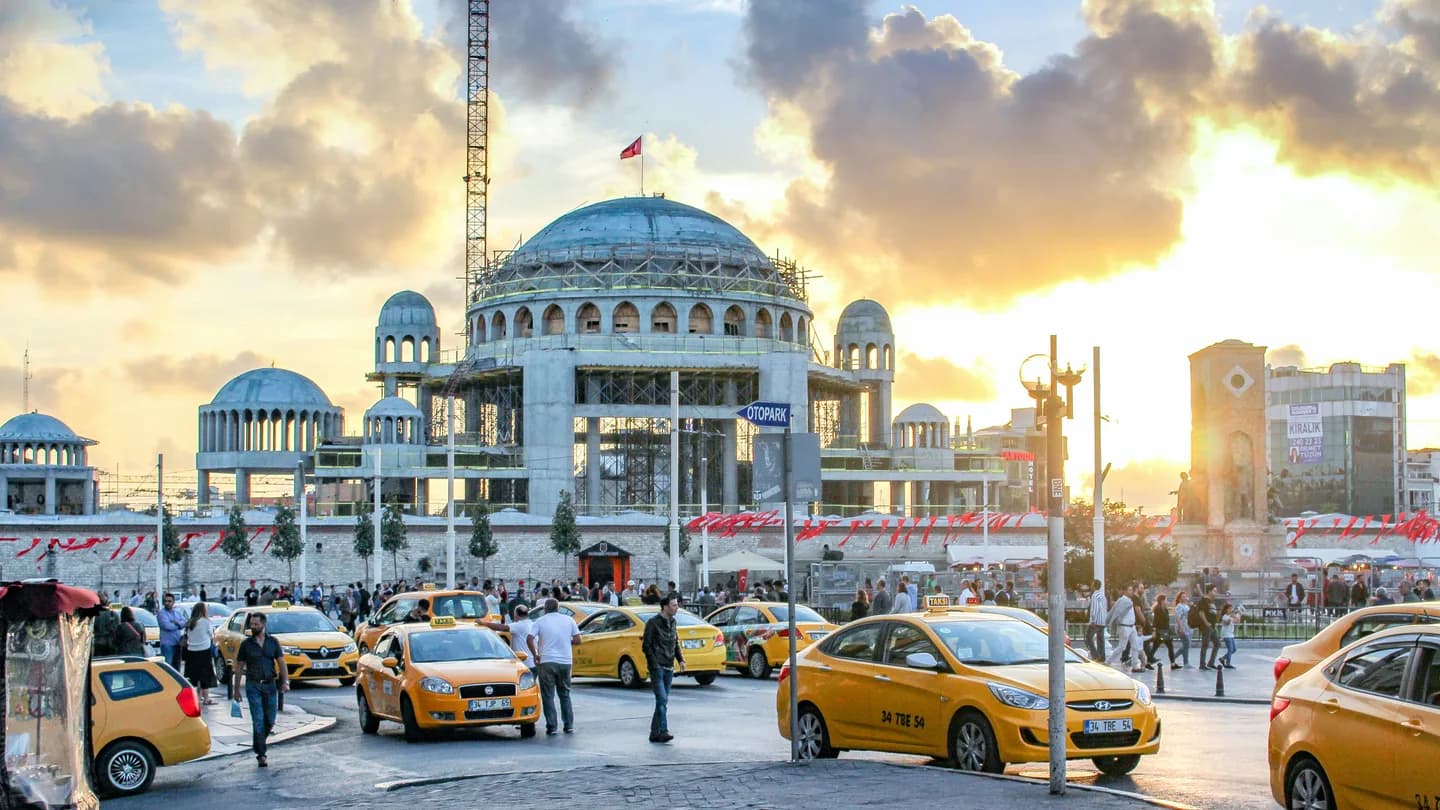
Istanbul already has licensed airport taxis and regulated tariffs, but unlicensed rides and tourist overcharging show how serious operators need clearer proof.
~63.9 million total visitors / 52.8 million foreign tourists2025 · Türkiye Ministry of Culture and Tourism 2025 reporting, reported by Daily Sabah
DRIVER COUNT
No reliable national comparable count; Istanbul is the key reference marketlatest available
Türkiye is one of the world’s strongest tourism markets, and Istanbul is one of the clearest examples of why transport trust cannot be reduced to a taxi colour, a queue or a meter. The city has official airport taxis, licensed vehicles, regulated tariffs and serious drivers serving millions of visitors. It also has repeated public warnings about unlicensed taxis, overcharging and tourist confusion.
That combination is exactly why SafetyRide should frame Türkiye carefully. The issue is not that Turkish taxis are generally untrustworthy. The issue is that serious licensed operators need to be easier to identify and prove at the moment when a visitor is tired, unfamiliar with the city and surrounded by competing transport offers.
Istanbul Airport's taxi cooperative and UKOME tariffs
Istanbul Airport already has a structured taxi model. The airport describes taxi services affiliated with the , offered in several categories and operating under -regulated taximeter tariffs. The airport’s arrival guidance also directs passengers to official taxi-station access from the terminal.
That is a positive starting point. It shows that the legitimate route exists. A traveller who follows the official airport process should be able to choose a licensed taxi rather than an informal offer. But visible structure does not always remove the evidence gap. The passenger still needs to know whether the vehicle is the correct taxi, whether the driver is part of the legitimate service, whether the meter or agreed fare context is correct, and whether the trip can be documented if something goes wrong.
Unlicensed taxis and the UK travel-advice warning
Public reporting illustrates why that matters. In June 2025, Hürriyet Daily News reported on updated UK travel advice warning visitors against unofficial and unregistered taxis in Türkiye. The advice urged travellers to use licensed and officially registered taxis, take note of licence plate and registration numbers, and ensure fares are calculated using a meter. The same report described local investigation into pirate taxi operations, including some working through mobile apps or messaging channels.
That is not just a passenger-safety point. It is also a serious-operator point. Every unlicensed or opportunistic ride damages the reputation of legitimate taxi drivers who operate under rules, pay fees, follow tariffs and serve travellers professionally.
UKOME enforcement against tourist overcharging
Istanbul has also seen enforcement around tourist overcharging. In September 2025, travel and local reporting described UKOME action against drivers accused of charging excessive fares to tourists, including revocation of operating licences. Those cases are important not because they prove the whole market is bad, but because they show that authorities and legitimate market actors have the same interest: protecting visitors while preventing a small minority from damaging trust in everyone else.
This is where a trip-level evidence layer becomes useful. A meter shows one part of the journey. A taxi sign shows another. A queue marshal or airport sign helps with the pickup environment. But the modern trust question is broader: can the traveller, hotel, airport, operator and regulator connect the driver, vehicle, pickup point, fare context and ride record in one neutral evidence trail?
A verified handoff for taxis, airports and hotels
SafetyRide’s role is not to replace Istanbul’s taxi rules or create a parallel dispatch system. It should not be presented as a ride-hailing competitor or a way to bypass local regulation. The stronger position is that SafetyRide can make licensed taxis and approved transport channels more visible and easier to trust.
For a licensed airport taxi, SafetyRide could help confirm that the vehicle and driver match the verified pickup context. For a hotel arranging transport, it could help the guest verify that the arriving vehicle is connected to the expected handoff. For tourism partners, it could reduce the reputational damage caused when visitors cannot distinguish between a serious operator and an informal or abusive one.
Türkiye also illustrates why tourism trust is a national and commercial issue. A single overcharging story can travel quickly online. A few bad actors can create a perception that harms many legitimate drivers, hotels, airports and destination partners. A country with strong tourism demand does not need fear-based messaging. It needs practical systems that make the safe and legitimate choice obvious.
That is the SafetyRide opportunity. Türkiye does not need a generic “taxi scam” narrative. It needs a verified handoff layer that supports the serious side of the market: licensed taxis, official airport processes, hotel partners, tourism operators and public authorities trying to keep the transport experience credible.
The real question is not whether Türkiye has taxis. It does. The question is whether the legitimate ride can be proven clearly enough, early enough, and in a way that protects both the traveller and the serious operator. That is the gap SafetyRide is built to close.
Where SafetyRide fits
SafetyRide can help Türkiye’s licensed taxis, hotels and airport partners make the legitimate ride easier to recognise before entry. That protects travellers and serious operators in one of the world’s major tourism markets.
Continue
Read more from SafetyRide.
Browse the rest of the articles, or get in touch about anything you read here.