Thailand’s airport taxi conflict is a pickup accountability problem
Thailand is tightening ride-hailing rules and airport pickup controls, but the deeper issue is proving the physical handoff.
May 11, 2026·4 min read·Thailand
THAILAND · TH
REF THAILAND-AIRPORT-TAXIS · 2026-05-11
POPULATION
71.6 million2026 · Worldometer / UN Population Division estimate
INT'L ARRIVALS
32.9 million international tourists2025 · Thai tourism ministry figures reported by Skift
DRIVER COUNT
~70,000+ taxi vehicles / public hire vehicles used as proxy; active driver count not confirmedlatest available
The airport is where transport trust becomes physical. A passenger has landed, bags in hand, surrounded by signs, queues, apps, prices and unfamiliar local rules. At that moment, trust is a question of which vehicle they enter, who is behind the wheel, what price they understand, and whether the ride can later be documented.
Thailand’s taxi and ride-hailing debate shows this clearly. The issue is not simply whether tourists should use taxis or apps. It is whether the market can prove the physical transport event well enough for passengers, drivers, airports and regulators to trust the same reality.
That distinction matters for serious Thai taxi drivers and responsible app-based operators. SafetyRide should not frame them as the problem. The problem is that, in a busy airport pickup moment, the professional and accountable option is not always easy enough to verify before the passenger steps into the vehicle.
Airport pickup is the pressure point
At Suvarnabhumi Airport, the official public taxi system already tries to make the pickup more orderly. The airport lists taxi counters and automatic ticket machines on the first floor between Gates 4 and 7, with a stated airport surcharge, toll responsibility and service categories.
The airport also publishes Bangkok taxi meter rates, including the starting fare and distance-based pricing. Visible fare logic is one layer of trust, but a fare table does not connect the driver, vehicle, pickup point, fare context and trip record into one verifiable event.
Regulation is moving toward identity and responsibility
Thailand has started to address the app side of this problem more directly. New rules reported under the country’s digital platform framework require ride-hailing drivers to hold a public driving licence and prohibit drivers from operating under another person’s identity. Platforms are expected to verify drivers and vehicles, display key details to passengers before booking, provide complaint and emergency channels, prevent account-sharing and submit operational reports to regulators.
That is an important shift. It recognizes that platforms are not just passive intermediaries. They shape identity, price presentation, access to passengers, dispute handling and the record of the ride.
The rules also bring in and Electronic Transactions Development Agency. The reference to shows that digital identity is becoming part of the transport conversation.
This is the right direction. Yet identity inside an app is not the same as proof that the physical pickup unfolded correctly at the curb.
The fairness issue is not separate from safety
Thailand’s airport dispute also has a market-fairness layer. Taxi groups have argued that app-based services at Suvarnabhumi reduce their income and create unequal access to arriving passengers. Public reporting describes traditional taxi drivers asking for equal visibility, designated service points, clearer airport information and a review of app-based operating permissions.
Authorities have tried to balance passenger choice with fair competition. Airports of Thailand was reported to be planning separate pickup zones, inspections of registered app vehicles, AI camera systems linked to DLT data and better passenger information. AOT also planned to use to manage public taxi queues in advance.
That response is telling. Thailand is not only asking who may pick up passengers. It is asking how the airport can make the pickup visible, ordered and fair.
The deeper point is that the transport event is also an economic event. If the pickup, driver, vehicle, queue, platform fee, fare logic and route are unclear, the people doing the physical work have less control over the value chain. Serious taxi drivers and app drivers both need a record that protects them against false claims and unclear responsibility.
Visitor trust can be damaged by a few actors
Thailand is a major visitor destination. Most trips work normally. Most drivers are not the problem. But a small minority of bad actors can damage trust far beyond the individual ride.
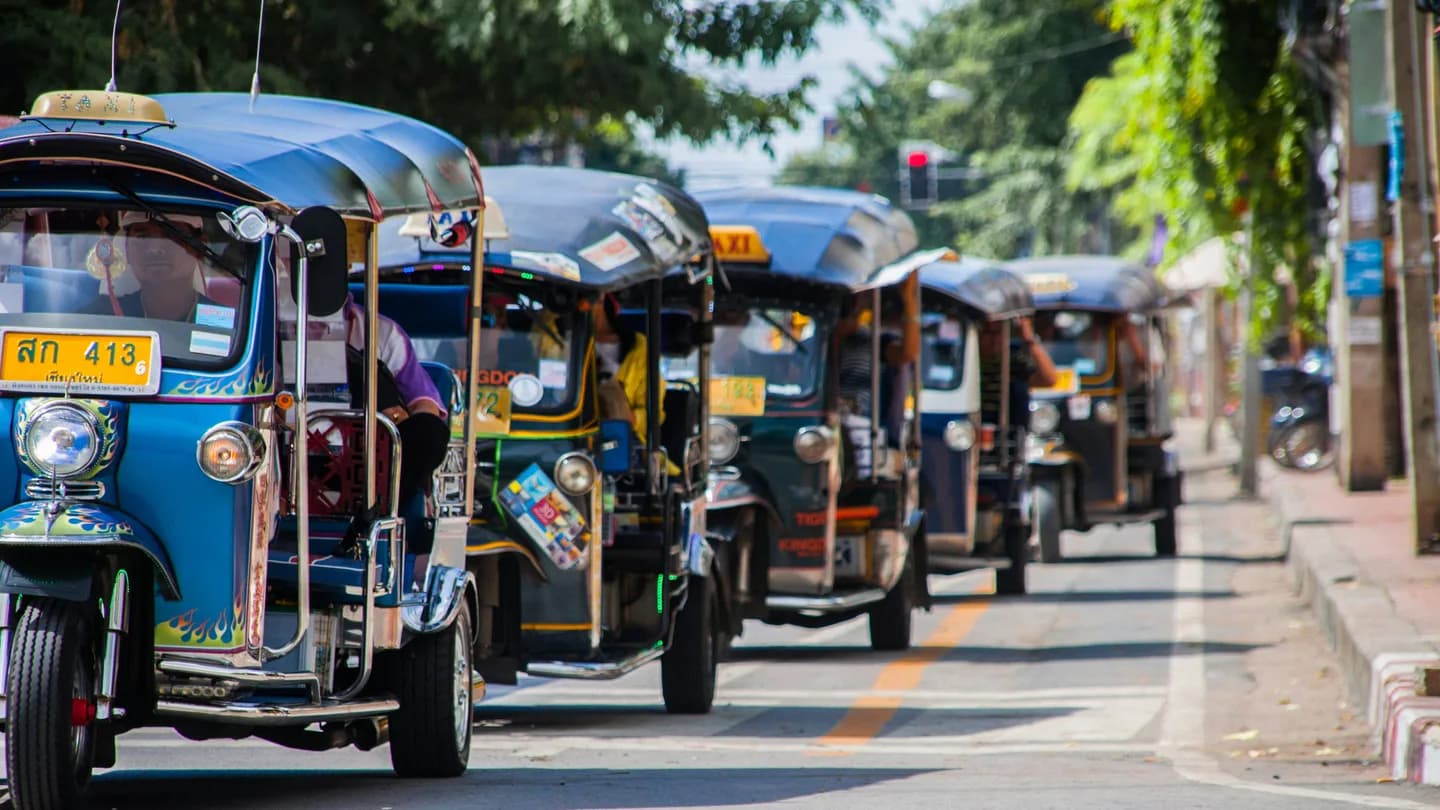
UK travel advice warns visitors to take care in open transport such as tuk-tuks and to pre-arrange transport rather than accepting lifts in unlicensed vehicles. That advice does not mean Thailand’s transport market is unsafe by default. It shows a practical reality: travellers often have limited local knowledge when judging whether a vehicle, price or pickup offer is legitimate.
Forum posts, viral videos and tourist stories about taxi overcharging or tuk-tuk scams should not be treated as hard statistics. They are perception signals. But perception matters because repeated stories can shape whether visitors trust local transport and whether legitimate drivers are judged by the behaviour of the few.
Technology should make exploitation much harder and leave a verifiable trail. It should also help protect the serious local drivers, airport staff and operators who want the system to work cleanly.
The missing layer is physical event proof
Thailand’s reforms are already moving toward stronger digital platform responsibility. The airport is moving toward more structured pickup zones and better passenger information. Taxi drivers are asking for fairness. Passengers want clarity. Regulators want standards.
What still needs to be stronger is proof of the physical transport event itself.
A platform record can show what was requested. An airport queue can show where taxis wait. A fare table can show how pricing should work. A complaint channel can collect what someone says later. The market still needs a neutral way to connect the driver, vehicle, pickup point, route, timestamp and event timeline.
That is not a replacement for regulation. It is what makes regulation easier to trust.
Where SafetyRide fits
SafetyRide can help Thailand’s airport transport ecosystem turn queues, apps and taxi rules into a clearer pickup record. It supports serious operators without replacing local processes.
Continue
Read more from SafetyRide.
Browse the rest of the articles, or get in touch about anything you read here.