REF MUTUAL-ACCOUNTABILITY · 2026-05-11
— Perspective
Mutual Accountability
Why safer transport needs evidence, verification and protection for both riders and drivers, not only one side of the trip.
May 11, 20267 min readGlobal
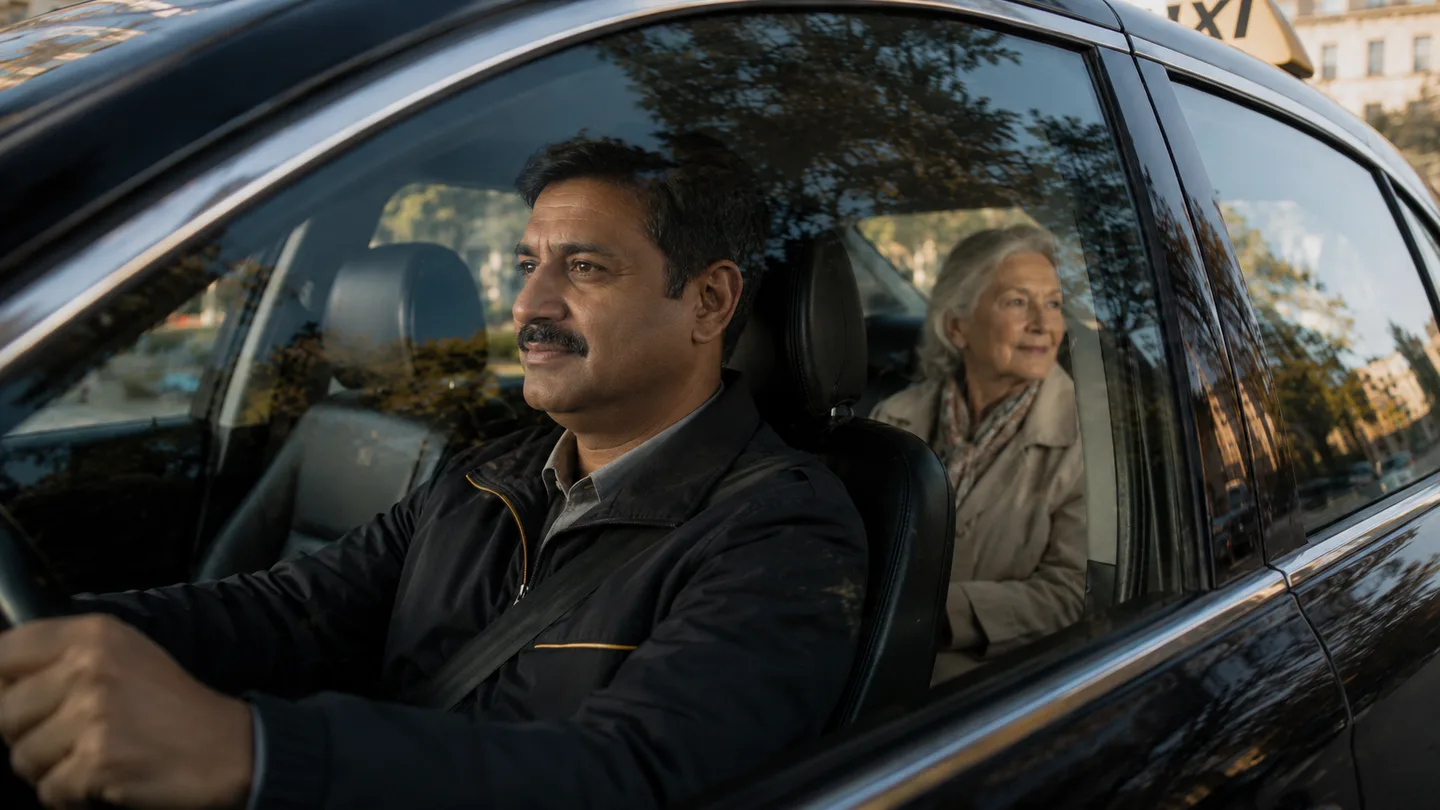
Transport safety is often explained as if only one side of the ride needs protection.
That is too narrow.
A rider may fear getting into the wrong vehicle, losing control of the situation, facing coercion or being unable to prove what happened. A driver may fear robbery, violence, abusive conduct, false complaints or a one-sided dispute process after the trip ends.
Both realities can exist at the same time.
That is why SafetyRide should be explained through mutual accountability.
This does not mean treating everyone like a suspect. It means reducing ambiguity so serious riders, serious drivers and serious operators can all be protected by the same shared record.
The simple version
Imagine two people signing a contract.
If only one person gets a copy, only one person controls the record.
That does not automatically mean the other person will be treated unfairly, but it means fairness depends on trust, access and process instead of shared proof.
Many transport disputes work like that today.
The trip happens in the real world, but the evidence often lives mainly inside one platform account, one support process or one central database. That can leave both parties exposed.
A rider may struggle to prove that the wrong vehicle arrived or that an incident escalated. A driver may struggle to prove that a complaint is misleading, incomplete or disconnected from what actually happened in the vehicle.
SafetyRide’s answer is not to take sides.
It is to create a more balanced record.
The risk is real for both sides
Official reporting already illustrates why a one-sided safety story is incomplete.
The reported in 2024 on assaults against both drivers and passengers in ridesharing and taxi services. The same year, GAO also documented that ridesharing and taxi companies use safety features aimed at both drivers and passengers.
Workplace safety guidance says something similar. describe taxi driving as work that can involve robbery, physical assaults and broader workplace violence risks.
That means a serious transport safety model should not only ask, “How do we protect the passenger?”
It should also ask, “How do we protect the driver, and how do we protect the integrity of the operator and the market?”
Why verification matters before the ride starts
Many disputes become harder because the first minutes were not clear enough.
Was this the correct vehicle? Was this the intended driver? Was this the authorised pickup point? Did the driver and rider both understand the trip context?
That is why Verified Handoff is not just a rider feature. It also protects the driver.
A correct and visible handoff can reduce impersonation, confusion, unauthorised solicitation and later disagreement about whether the ride started the way it should have.
This is also where the policy logic behind Sami’s Law matters. The public concern was not abstract. It was about making the correct ride easier to verify before entry.
Why proof must work after the trip too
Not every dispute is settled at the curb.
Some problems appear after the trip: an allegation, a complaint, a payment dispute, a safety report or a question from an insurer, operator or authority.
That is where Hardware Evidence Chain and Evidence Integrity matter.
If the trip can generate a structured record that connects verified handoff, route, timing, vehicle context, event timing and, where enabled, audio evidence, then both rider and driver are less dependent on memory and screenshots alone.
If that record is protected as tamper-proof trip evidence, then the argument shifts from “who tells the best story?” to “what does the evidence show?”
That is better for everyone except the bad actor.
Why drivers need this too
A common weakness in transport debate is that driver protection is often treated as secondary.
But a serious market needs serious drivers to stay in it.
If a professional driver feels that one false complaint can trigger account damage, lost income or a one-sided dispute process, trust in the system drops. If a driver faces aggression in the vehicle and has little reliable evidence afterwards, the safety system has failed that worker too.
This is one reason the European Union’s platform work rules matter. The direction of travel is clear: more scrutiny of automated decisions, more attention to personal data handling and more pressure for human oversight when digital systems affect workers.
SafetyRide belongs in that direction because it can create stronger proof around what happened, rather than asking people to rely only on internal platform logs and opaque decisions.
Why riders should want the same thing
Rider protection does not get weaker when driver protection gets stronger.
It gets stronger too.
A rider benefits when the system can prove that the vehicle was the correct one, that the route and timing were recorded, that an emergency trigger existed and that an incident record did not depend only on the platform’s private database. A rider also benefits when serious drivers remain inside the market because the system treats them fairly enough to stay professional, visible and accountable.
That is what mutual accountability means in practice.
It is not a negotiation between two separate safety systems. It is one trust architecture serving both sides of the trip.
Where audio evidence fits
Audio evidence matters here for the same reason it matters in AI SOS and Hardware Distress Signals.
When enabled with clear consent, notice and purpose limitation, audio context can protect both sides.
A rider may need to preserve verbal threats or coercion. A driver may need to preserve abusive language, instructions, threats or the context behind a later complaint.
The point is not to normalise constant recording for its own sake.
The point is to make sure that when a serious dispute arises, the people involved are not left only with memory, platform summaries and a support queue.
Why this helps serious operators
Serious operators should want less ambiguity, not more.
A market becomes easier to defend when official rides are easier to verify, disputes are easier to examine and good drivers are easier to distinguish from bad actors. It also becomes easier to build trust with airports, hotels, regulators, insurers and high-value partners when the transport system can show a clearer accountability model.
That is why SafetyRide should not be framed only as a consumer safety layer. It is also operator protection infrastructure.
The deeper point
The deeper point is that safety becomes stronger when the system stops pretending only one party needs evidence.
Mutual accountability is not about blame.
It is about making the truth easier to preserve.
Where SafetyRide fits
SafetyRide is strongest when it protects both sides of the ride. A shared record can help a passenger explain what happened, while also helping a driver defend against false or incomplete claims.
Continue
Read more from SafetyRide.
Browse the rest of the articles, or get in touch about anything you read here.