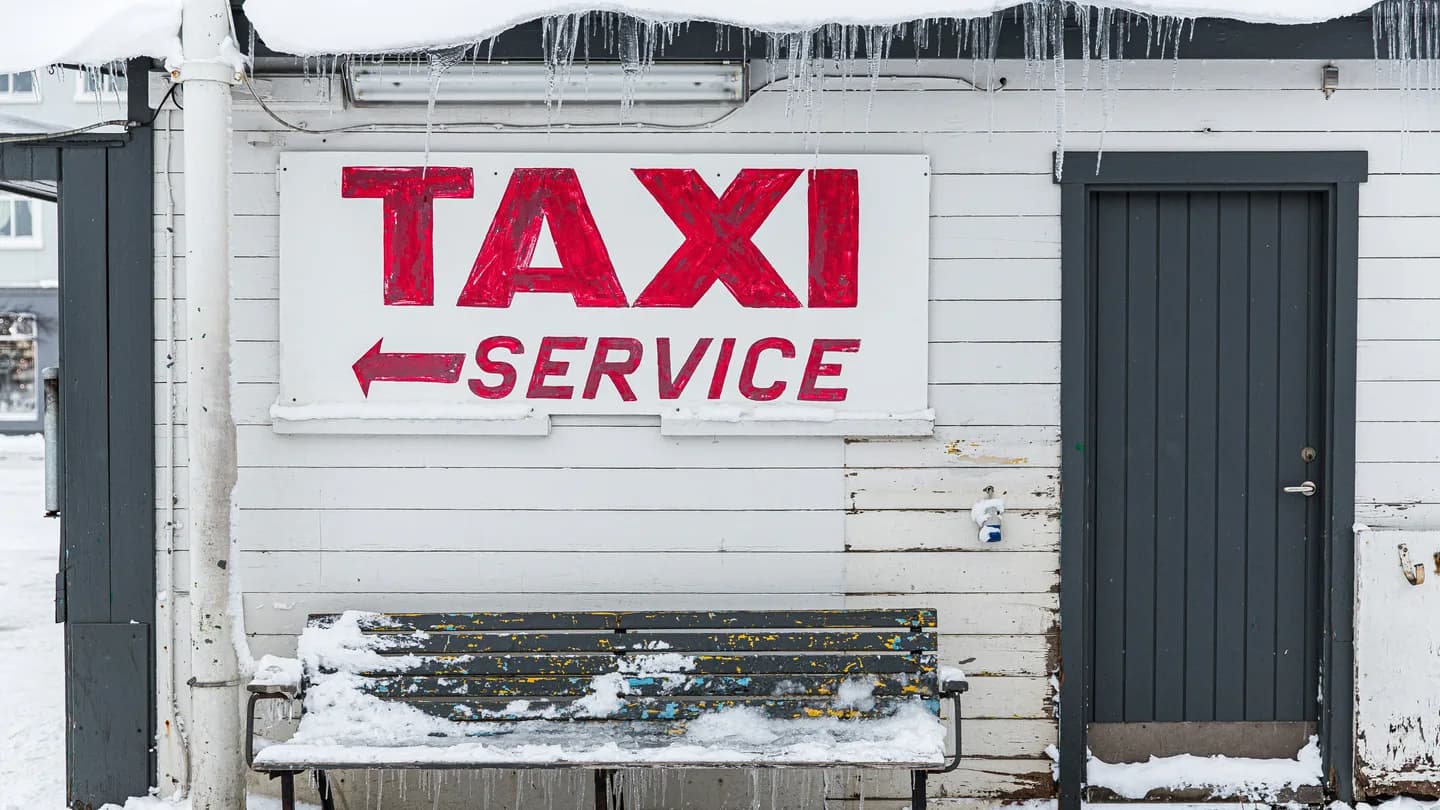
Iceland’s taxi reform puts serious operators in the spotlight
Iceland’s taxi market is being tightened after complaints, airport checks and calls for better oversight. The lesson for SafetyRide is that serious operators need to be easier to verify at the pickup moment.
May 11, 2026·5 min read·Iceland
ICELAND · IS
REF ICELAND-TAXI-PROOF · 2026-05-11
POPULATION
~400,0002026 · UN WPP 2024 / Statistics Iceland cross-check recommended
Iceland is a good example of why SafetyRide should not be framed as a tool for exposing a country’s transport sector. The better question is how a country with serious local operators can make those operators easier to recognise, choose and trust when a visitor has just landed.
Keflavík Airport's guidance to ask, check and report
That question matters at . The airport’s own taxi guidance is practical and revealing. It tells passengers to ask about the price before the journey starts, review the taxi’s price list before getting in, understand that fixed prices should be based on the price list, get a receipt and report violations. It also says taxi drivers are not allowed to refuse a ride.
That is not a vague tourist-warning page. It is an official airport telling travellers exactly which trust signals they need to check before the ride begins. The reason is simple: when someone lands in a new country, a taxi is not just transport. It is the first handoff between the visitor, the airport, the local market and the destination.
Iceland’s taxi story became more sensitive after legal changes in 2023. Taxi driving remains a permit-required activity under the and taxi-driving regulation, but the structure around the market changed. Local reporting in 2025 and 2026 shows that the issue became public enough for enforcement and reform to become part of the national conversation.
The 2025 enforcement push and the "Wild West" warning
Iceland Review reported in August 2025 that police on the Reykjanes Peninsula had stepped up checks of taxi operations at Keflavík Airport after months of criticism. The report described complaints about tourists being overcharged or refused service for short journeys. It also said the Minister of Infrastructure had described the sector as the “Wild West” earlier that year, and that airport operator had expelled 100 taxi drivers from the terminal for rule violations.
That does not mean Icelandic taxis are generally unsafe or unserious. It means the opposite point is commercially important: the serious operators need a clearer way to stand apart from drivers who create confusion, refuse rides, ignore price rules or weaken trust in the wider market.
The enforcement details are important because they show what authorities are actually trying to verify. Police checks at the airport focused on whether drivers held valid commercial permits from the Icelandic Transport Authority. Reykjavík Grapevine, citing Vísir, reported that officers checked whether drivers had a driving licence, work and operating permits, a visible price list, a fare meter and other required elements.
The same article noted that the Blue Lagoon had put up signs warning tourists against unlicensed or otherwise deceitful taxi drivers. The signs urged visitors to check the meter, certification and licensing of the driver, and to understand normal taxi rates in Iceland.
This is the SafetyRide gap. The problem is not that Iceland lacks rules. The problem is that the visitor is asked to perform a small compliance audit in a real-world pickup moment. The traveller has to check the car, driver, meter, price list and legitimacy while tired, carrying luggage and often unfamiliar with normal local fares.
The 2026 reform package — TX plates, supervision, driver exams
Iceland’s proposed reforms point in the same direction. Iceland Review reported in January 2026 that the Infrastructure Minister proposed changes to improve safety, transparency and professionalism in the taxi market. The proposed measures included distinct taxi licence plates, stricter supervision by the Icelandic Transport Authority, rules of conduct for taxi stands, clearer price lists inside vehicles and new exam requirements for drivers licensed after the 2023 changes.
Those reforms are not anti-taxi. They are pro-serious taxi. They recognise that professionalism is not only about what happens after a complaint. It is also about making the legitimate service visible before a passenger steps into the vehicle.
For a tourism market, that distinction matters. Iceland’s reputation depends heavily on visitor trust. A small number of confusing or negative pickup experiences can affect how travellers talk about the destination, the airport and the local transport sector. That is unfair to responsible drivers and operators who follow the rules, use meters correctly, accept short rides and provide good service.
Connecting trust signals into a verified handoff
SafetyRide’s role in this kind of market is not to replace taxi companies, airport pickup zones or national licensing rules. It is to connect the trust signals that already exist. A traveller should not have to separately interpret licence status, taxi stand legitimacy, price list, driver identity, receipt and complaint path. Those pieces can be connected into a simpler verified handoff.
For the serious driver, that becomes a competitive advantage. A verified pickup can show that this vehicle, this driver and this trip context belong to a legitimate service. For the airport, it reduces friction at the curb. For hotels and tourism operators, it helps make the arrival journey feel more controlled. For authorities, it creates a cleaner evidence trail when something later needs review.
Iceland therefore makes a precise point for SafetyRide: even small, high-trust destinations can face a proof problem when regulation, tourism volume and airport pickup pressure meet. The stronger the destination brand, the more important it becomes to protect the responsible operators who carry that brand in the first hour after arrival.
Where SafetyRide fits
SafetyRide belongs in Iceland by making reform visible to travellers and serious operators. The country does not need a disruption story; it needs a simple way to show which vehicle and operator belong to the trusted system.
Continue
Read more from SafetyRide.
Browse the rest of the articles, or get in touch about anything you read here.