REF HARDWARE-TRUST-POINT · 2026-05-11
— Perspective
Hardware Trust Point
Why SafetyRide brings physical verification into the vehicle, trip and evidence chain, instead of relying on software accounts alone.
May 11, 20266 min readGlobal
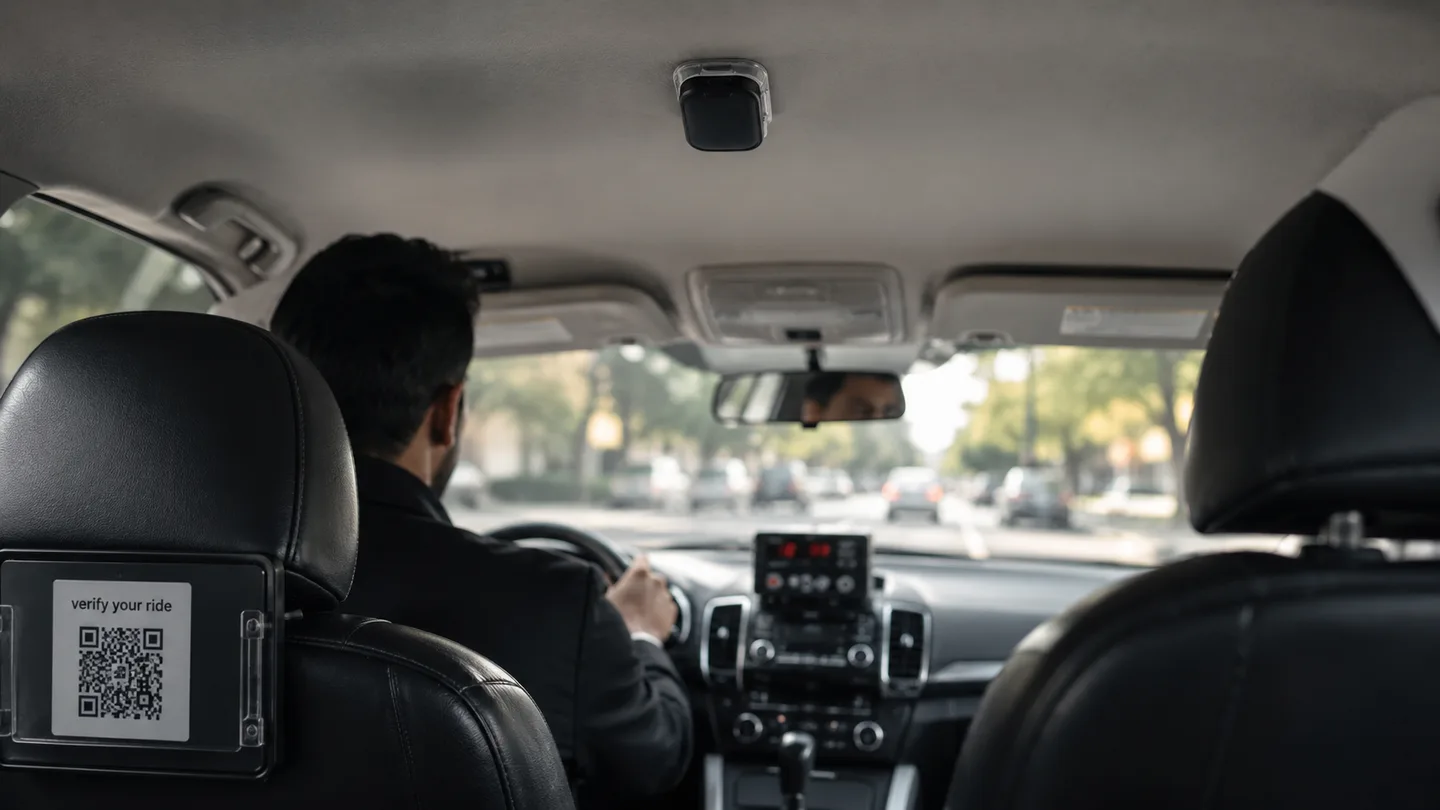
Transport safety often fails at the same point where software becomes weakest: the moment a person meets a vehicle in the real world.
An app can show a name, photo, license plate and rating. A taxi queue can show a sign, a meter and a regulated fare. An airport can publish an official pickup map. All of that matters. But the passenger still has to make one physical decision: is this the right vehicle, with the right driver, at the right pickup point, for the right trip?
SafetyRide’s answer begins with a hardware trust point.
That means SafetyRide is not just trying to improve the app screen. It is trying to make the physical journey itself more verifiable. The vehicle becomes part of the safety architecture. The trip record becomes more than a receipt. The device becomes a physical trust point between the person, the operator, the pickup channel and the evidence chain.
The limits of software-only ride safety
This is important because today’s transport systems already contain many safety features. The U.S. Government Accountability Office describes common ridesharing and taxi safety tools such as license plate matching, driver name and picture, emergency call buttons, decals, cameras and partitions. These features are useful. They also show the direction of travel: safety is becoming more visible, more documented and more connected to the moment before the ride begins.
But software-based safety has a natural limit. It can ask the rider to check the plate. It can ask the driver to confirm a selfie. It can send a prompt after an unusual stop. It can offer an in-app emergency button. These tools can reduce risk, but they still depend heavily on the phone, the platform account and the user’s ability to act at the right moment.
Real transport does not always give people that moment.
A phone can be locked, dead, broken, out of reach or taken. A rider may be tired after a flight. A driver may be responding to a passenger complaint after the trip is already over. A hotel guest may be met by someone who looks plausible. A licensed operator may lose the passenger to an unauthorised actor who copies the visible signals of legitimacy.
The case for a physical trust point
That is why a physical trust point matters.
A physical trust point makes verification less dependent on memory, screenshots or platform promises. It can help show that this vehicle, this driver, this pickup point and this trip record belong together. It can also support serious operators by making them easier to distinguish from unofficial or opportunistic actors.
This is not about replacing licensed taxi companies, local dispatch, private hire operators, hotels, airports or regulators. SafetyRide’s stronger position is the opposite. It gives the serious actors a stronger visible layer of trust.
A licensed airport taxi should be easier to verify than a person soliciting rides inside a terminal. A hotel-approved driver should be easier to identify than someone waiting outside the lobby. A booked ride should be easier to match to the correct vehicle before the passenger steps in. A professional driver should have better evidence protection when a false complaint is made.
This is where the rest of SafetyRide’s Deep Content connects.
Verified Handoff explains the passenger-facing moment: how the ride should be verified before someone enters the vehicle. Later articles such as Hardware Evidence Chain and Evidence Integrity will explain what happens after the trip starts: how route, timing, proximity, event data and cryptographic proof can become part of a tamper-proof evidence structure. and Hardware Distress Signals will explain why emergency access cannot depend only on an app button.
The technology is advanced, but the basic idea is simple.
Imagine a building with a front desk. A visitor does not get access because they typed a name into a website. They get access because their identity, appointment, host and physical presence are checked together. Transport needs a similar shift. The trip should not only be a booking entry in a platform. It should be a verified real-world handoff.
SafetyTag turns trust into a real-world handoff
That is what SafetyTag makes possible.
SafetyTag can be explained publicly as the hardware trust point behind SafetyRide. It gives the vehicle a physical trust point and helps connect the vehicle, trip and safety record. The approved public language is simple: , device-linked trust point, physical trust point and vehicle verification layer.
The details under that architecture do not need to be public for people to understand the value. A passenger does not need to know the engineering behind a payment terminal to understand that a verified payment receipt is different from a verbal promise. In the same way, a transport user does not need to know the internal sensor logic to understand the value of device-linked trip record.
The long-term point is not that every trip should feel monitored. The point is that a trip should be accountable when accountability matters.
Trust infrastructure, not surveillance
That distinction is crucial. SafetyRide is not surveillance infrastructure. It is trust infrastructure. It is designed around the idea that evidence should be available when needed, limited by purpose, and useful to the people who actually depend on it: riders, drivers, operators, insurers, authorities and serious transport partners.
The future of safe transport will not be solved by app screens alone. It will be solved by connecting digital trust to the physical journey.
That is the role of the hardware trust point.
Where SafetyRide fits
SafetyRide’s hardware trust point gives the vehicle a physical evidence anchor. The aim is not to make transport more complicated, but to make identity, route and event context harder to quietly change after the ride.
Continue
Read more from SafetyRide.
Browse the rest of the articles, or get in touch about anything you read here.